Twenty years ago, many facilities viewed water treatment as a utility. Today, it has become a critical process component that directly impacts product quality, patient safety, research accuracy, and operational efficiency.
Whether supporting a hospital, research laboratory, pharmaceutical manufacturer, or industrial operation, water quality now plays a much larger role in daily operations than many people realize. As industries continue to evolve, facilities are facing increasingly specific water quality requirements driven by technology, regulations, and performance expectations.
The result is a growing need for water treatment systems that are designed around the application rather than relying on a one-size-fits-all approach.
Regulatory Standards Are Raising Expectations
One of the biggest reasons water quality requirements are becoming more specialized is the growing number of industry regulations and standards.
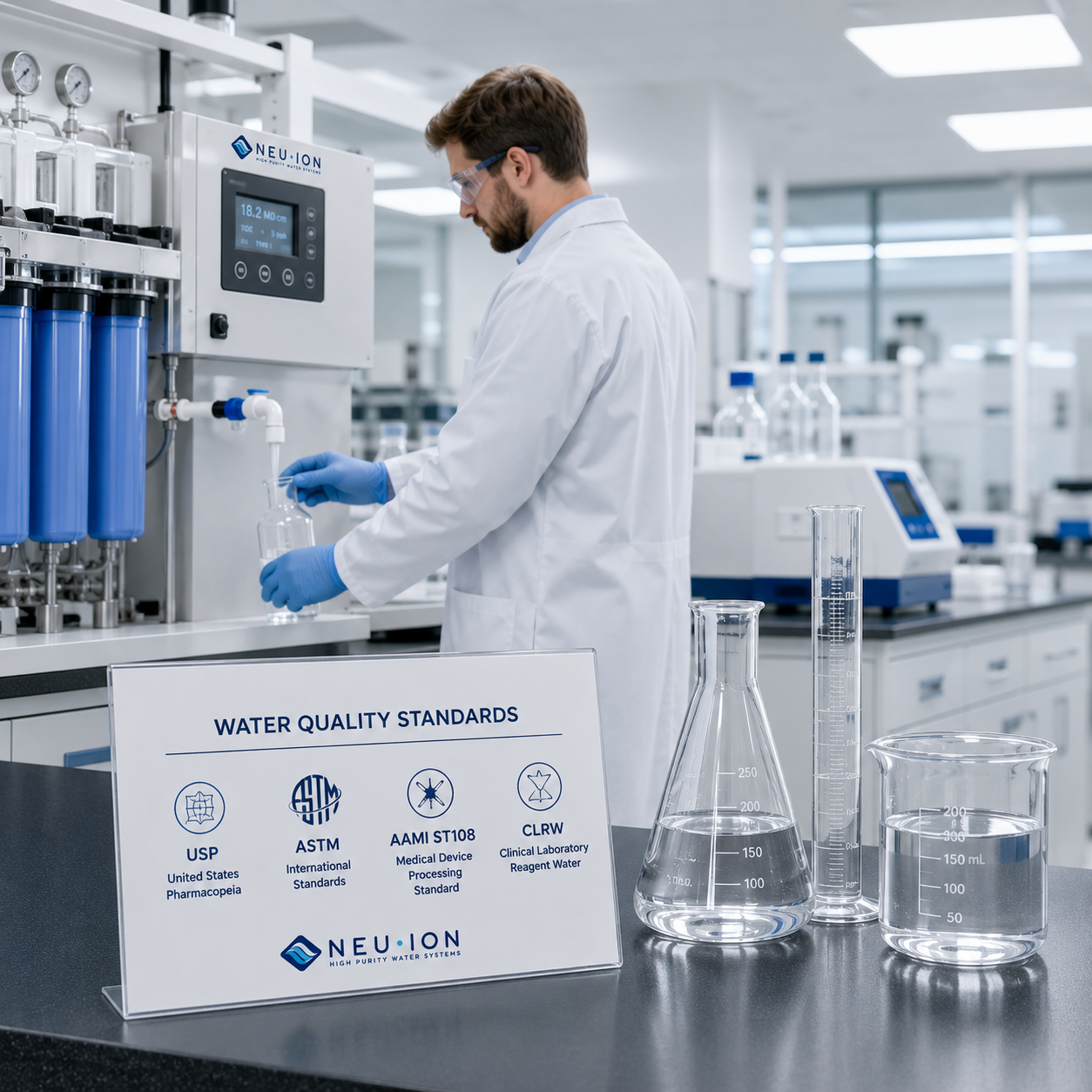
Organizations today must consider guidance and requirements from standards such as USP, ASTM, AAMI ST108, and Clinical Laboratory Reagent Water (CLRW) specifications. These standards help define water quality requirements for specific applications, including laboratory testing, medical device processing, pharmaceutical production, and healthcare operations.
As these standards continue to evolve, facilities must ensure that their water systems can consistently produce water that meets the required specifications.
This often means that a single facility may have multiple water quality requirements depending on how the water is being used throughout the building.
Different Applications Require Different Water Quality
One of the most common misconceptions about water treatment is that all purified water serves the same purpose.
In reality, different processes often require very different levels of treatment.
Consider a healthcare facility where sterile processing equipment, laboratory testing, and building humidification all rely on water. Each application may require a different level of treatment, even though they exist under the same roof. Designing one system to meet every requirement can increase cost and complexity without improving performance.
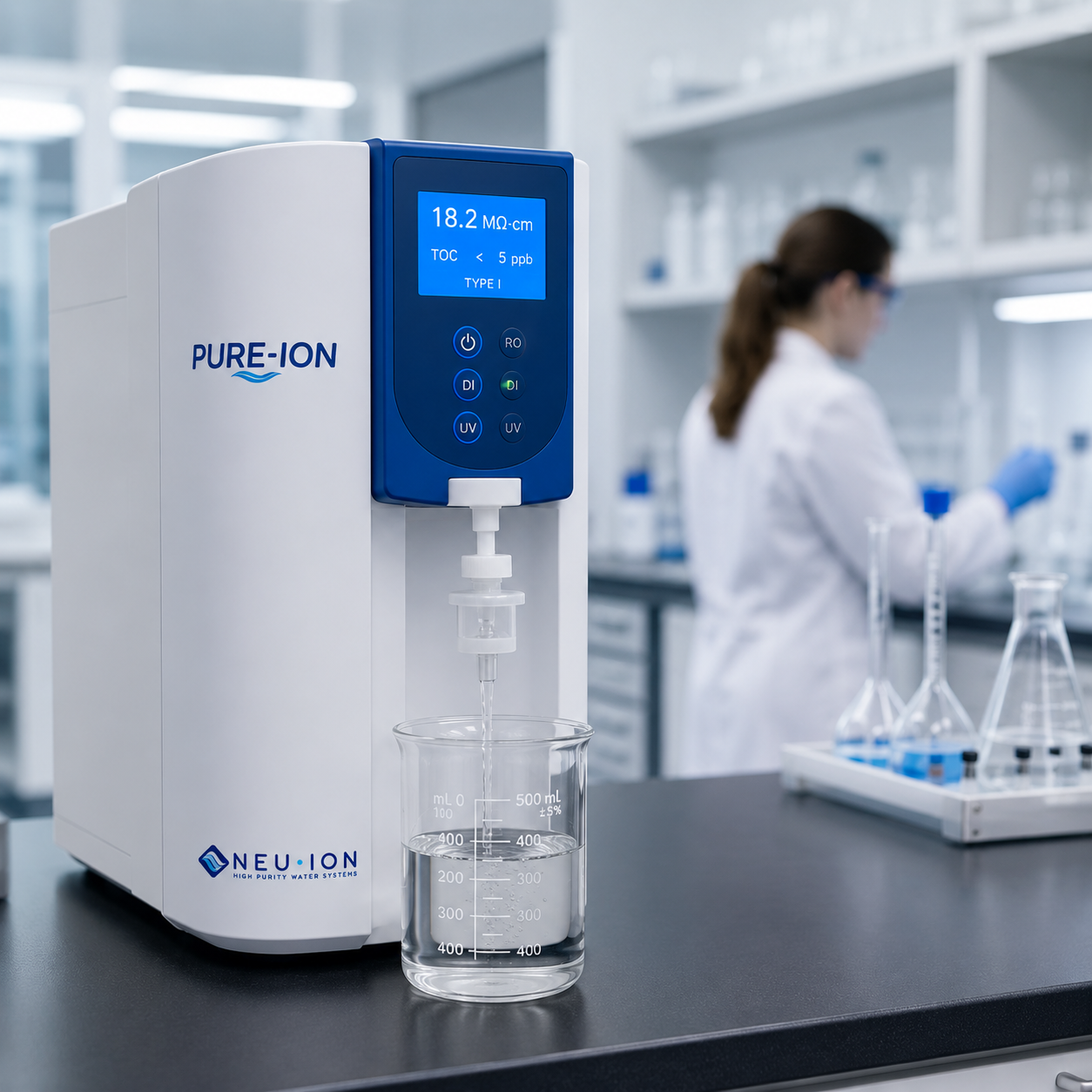
The same principle applies across many industries. A laboratory conducting analytical testing may require Type I water for highly sensitive procedures. Another department may only need Type II water for routine testing and reagent preparation. Equipment rinse applications may function perfectly with Type III water.
Understanding these differences helps facilities select treatment solutions that provide the appropriate level of purification without overengineering the system.
Why Oversized Systems Are Not Always Better
When facilities begin evaluating water treatment options, there is often a tendency to focus on future growth and maximum capacity.
While planning ahead is important, oversized systems can introduce unnecessary costs and operational challenges. Larger systems typically require more space, higher utility consumption, additional maintenance, and larger capital investments.
In many cases, a properly designed system that matches actual demand provides better efficiency and long-term value.
Organizations seeking pure water systems in Richmond, Virginia are increasingly looking for customized solutions that align with their operational requirements instead of investing in infrastructure that exceeds their needs.
The goal is not simply to produce more purified water. The goal is to produce the right water quality for the right application.
Modern Water Treatment Offers More Flexibility Than Ever
Today’s water treatment technologies allow facilities to take a much more strategic approach to purification.
Compact point-of-use systems, centralized treatment systems, RO-EDI technologies, deionization systems, and advanced monitoring capabilities provide flexibility that was not available years ago.
Facilities can now select technologies based on their specific applications, available space, growth plans, and regulatory requirements.
For example, organizations evaluating DI water systems in Washington D.C. often discover that modern system configurations allow them to achieve required water quality standards while maintaining flexibility for future expansion.
This ability to tailor a system around actual operational needs helps improve both performance and cost efficiency.
Looking Beyond Equipment Specifications
Flow rates, storage capacities, conductivity levels, and resistivity measurements are important considerations when evaluating water treatment equipment. However, successful projects involve much more than technical specifications.
Facilities must also consider serviceability, maintenance requirements, future scalability, compliance obligations, and operational objectives.
A system that performs well on paper may not be the best fit if it cannot support future growth or accommodate changing regulatory requirements.
The most successful water treatment projects begin with understanding the application and designing a solution around those specific needs.
Building a Water Treatment Strategy for the Future
Water quality requirements will continue becoming more specialized as industries evolve and standards become more stringent.
Facilities that take a proactive approach to water treatment planning are often better positioned to adapt to changing regulations, support operational growth, and maintain long-term performance.
At Neu-Ion, we help organizations evaluate their water quality requirements, understand applicable standards, and develop solutions tailored to their unique applications. Whether the need is a compact point-of-use system, a centralized purification system, or a combination of technologies, our focus is always on delivering reliable performance and long-term value.
If you’re planning a new facility, upgrading aging equipment, or evaluating whether your current system still meets your operational goals, Neu-Ion can help assess your requirements and develop a solution tailored to your application. Call us today!