Water is one of the most important ingredients in food and beverage production, even when nobody sees it.
It goes into the finished product, washes ingredients, rinses equipment and feeds the boilers that keep production running. When water quality shifts, the effects show up everywhere: in flavor, in maintenance logs and in unplanned downtime.
For food and beverage manufacturers across Maryland and the Mid-Atlantic, the right water treatment strategy protects product consistency, equipment and day-to-day operations.
How Water Quality Affects Your Finished Product
When water becomes part of a food or beverage, its chemistry becomes part of the recipe.
Brewers know this well. Most municipal systems disinfect with chlorine or chloramine, and both can react with compounds in the brew to create medicinal, plastic-like off-flavors. Chlorine is relatively easy to remove with activated carbon. Chloramine is more stable. It won’t boil off or dissipate when water sits, and it typically requires catalytic carbon with longer contact time to remove reliably.
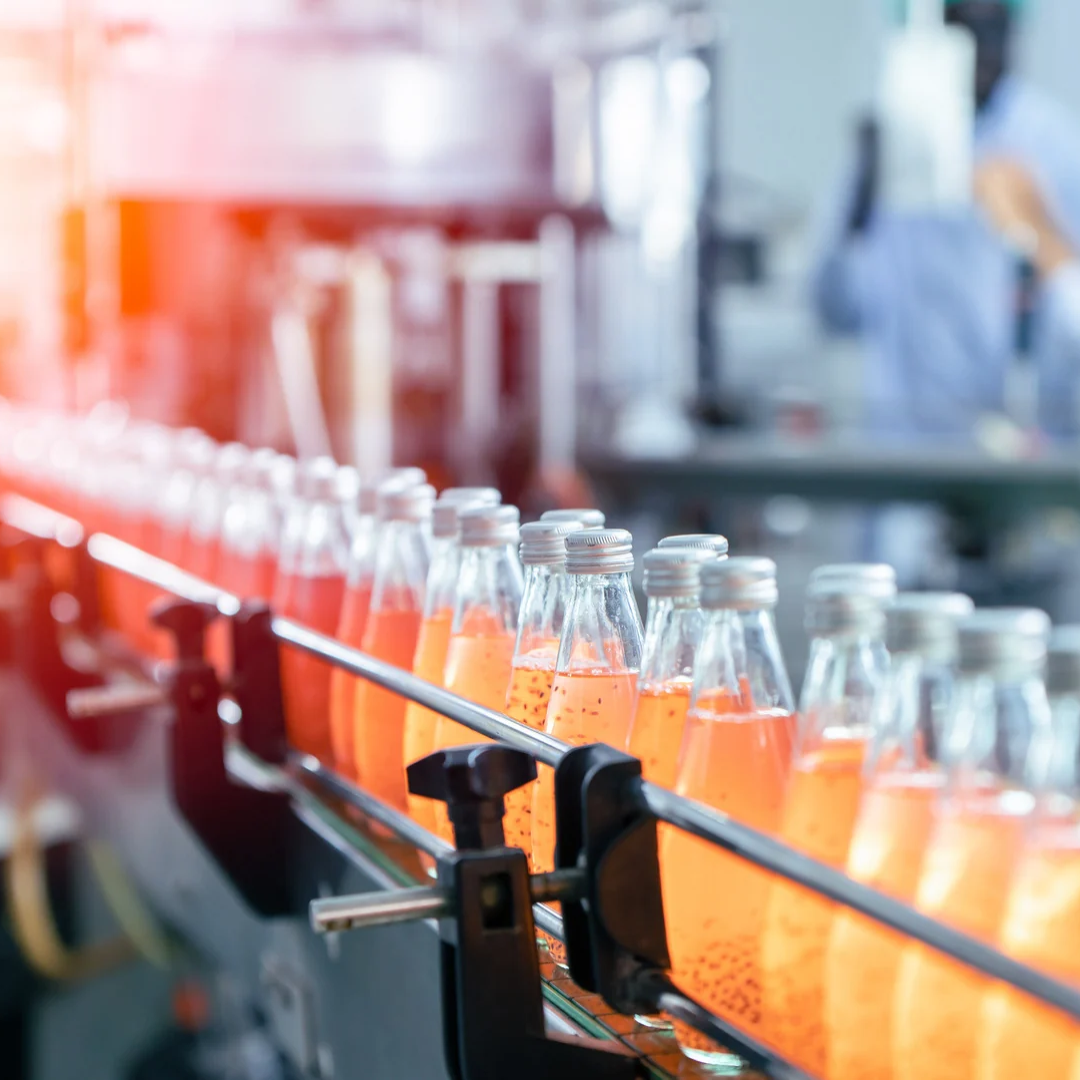
Bottlers face a different challenge: consistency. Municipal water isn’t static. Dissolved minerals can shift with the seasons, with heavy rain or drought, or when a utility changes its source. A reverse osmosis system removes the vast majority of dissolved solids, giving the facility a consistent baseline to build its product on, no matter what’s coming in from the street.
Rinse water matters, too. Minerals left behind in final rinses can spot surfaces and leave deposits on equipment, which is why many facilities treat the water used in their cleaning cycles, not just the water that goes into the product.
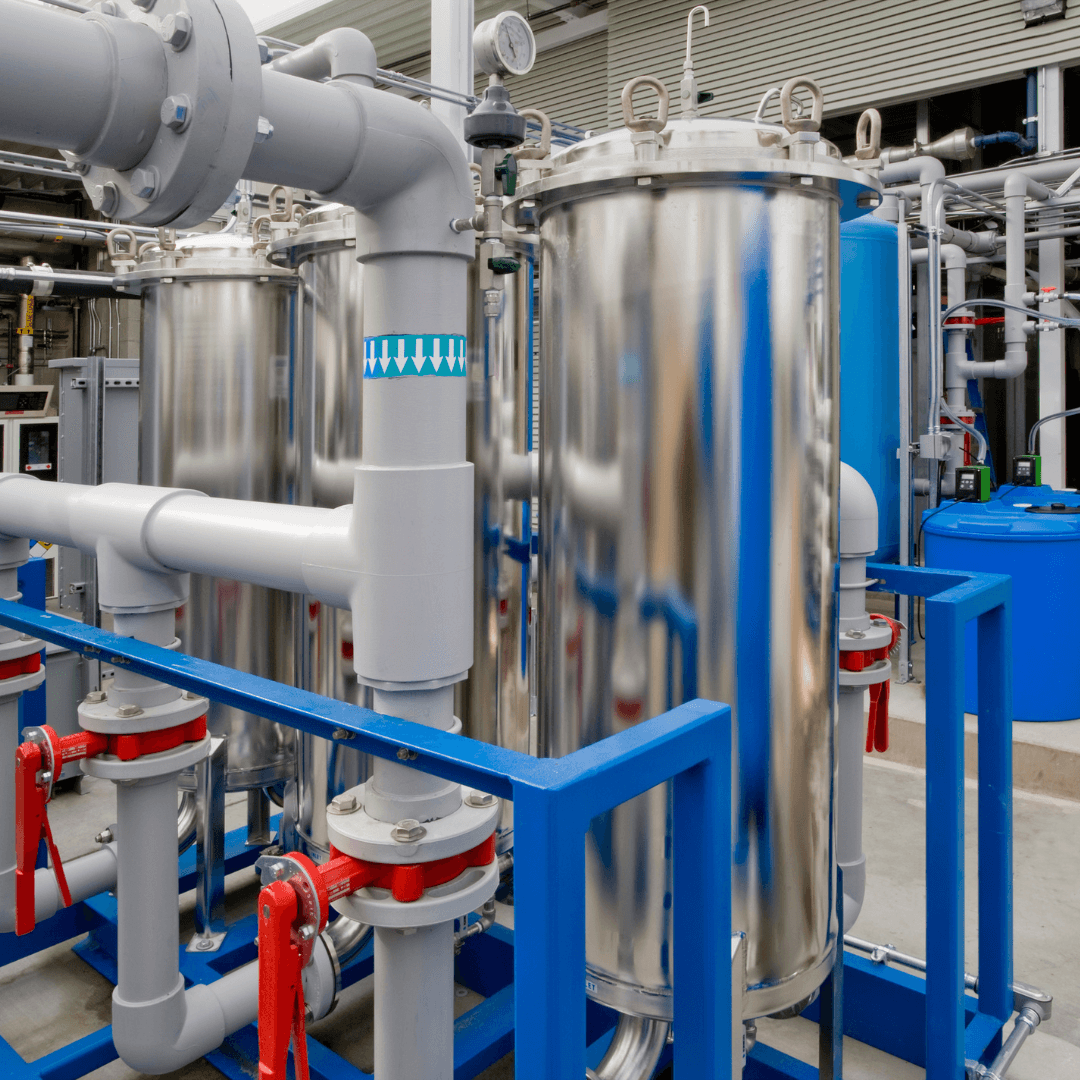
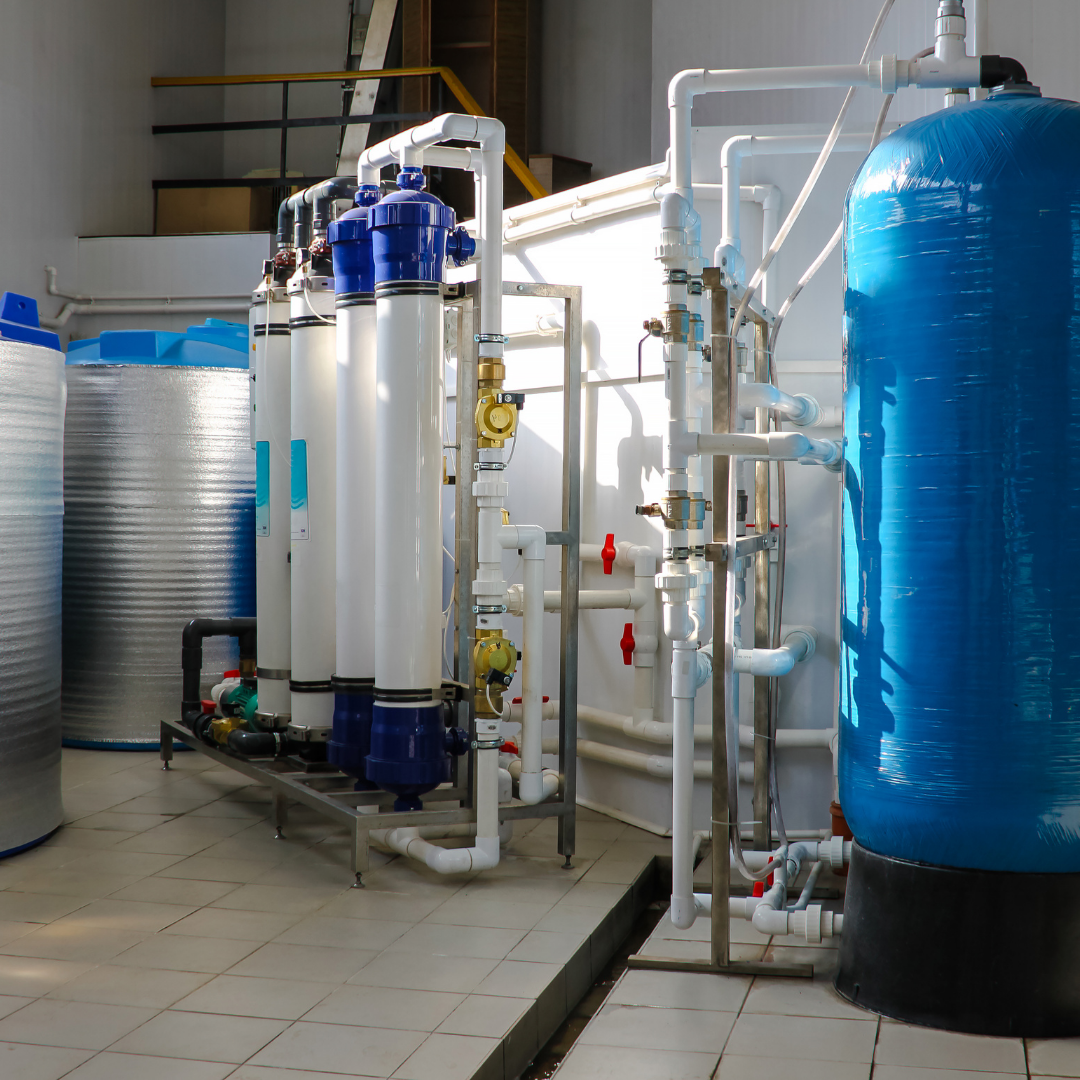
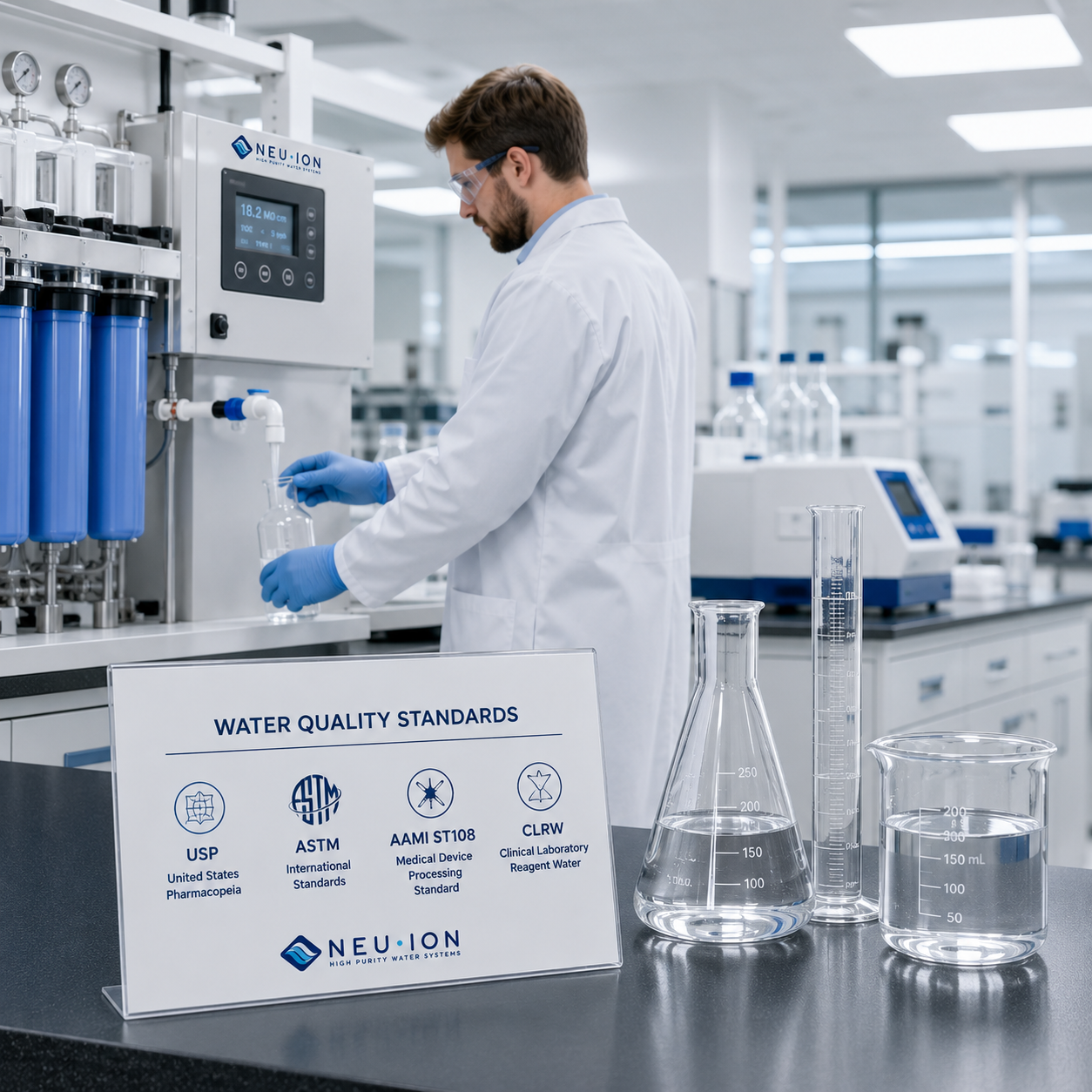
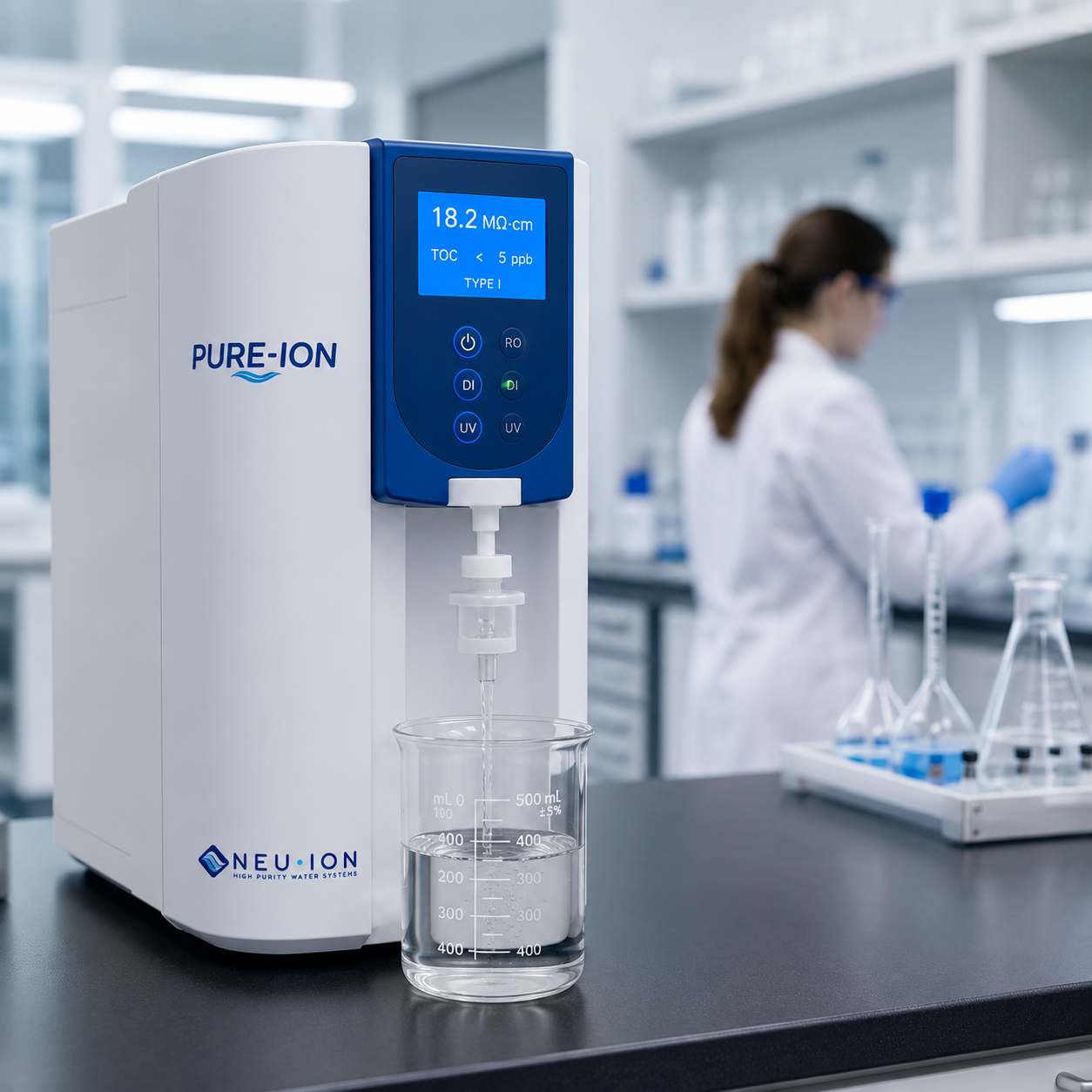
That’s why food and beverage water treatment should be designed around the application, not pulled off a shelf. Neu-Ion builds custom purification systems that combine reverse osmosis, deionization, filtration, ultraviolet treatment and other technologies based on what each facility actually needs.
Protecting the Equipment Behind Production
Water quality also determines how long equipment lasts and how hard it has to work.
Hardness minerals (calcium and magnesium) form scale on heating elements, inside piping and on heat-exchange surfaces. Suspended solids clog valves, nozzles and spray heads. Left unaddressed, these problems reduce efficiency, raise maintenance costs and shorten equipment life.
Commercial kitchens and commissaries see this every day. Steamers, combi ovens, coffee equipment and ice machines are especially vulnerable to scale, and many manufacturers specify water quality requirements as a condition of warranty coverage. Softening and filtration ahead of this equipment cost far less than replacing heating elements or descaling on a constant schedule.
A properly designed commercial water treatment system deals with the incoming water before it becomes an operational problem. Depending on the application, that may include softening, filtration, reverse osmosis or deionization, along with monitoring that gives your team real-time visibility into water quality and system performance.
When an hour of downtime means lost product and missed shipments, prevention pays for itself.
Boiler Feed Water: The Hidden Cost Center
Many food and beverage facilities rely on steam for cooking, pasteurization, sterilization and cleaning. Boiler feed water is easy to overlook until it becomes expensive.
Hardness and silica in feed water form scale on boiler tubes. Scale acts as insulation, so even a thin layer forces the boiler to burn more fuel to produce the same amount of steam. Over time, that buildup can lead to overheating, tube failure and unplanned shutdowns.
High dissolved solids create a second problem. As water turns to steam, solids concentrate inside the boiler, and operators must “blow down,” or discharge, hot treated water to keep those levels in check. Every blowdown sends water, energy and treatment chemicals down the drain.
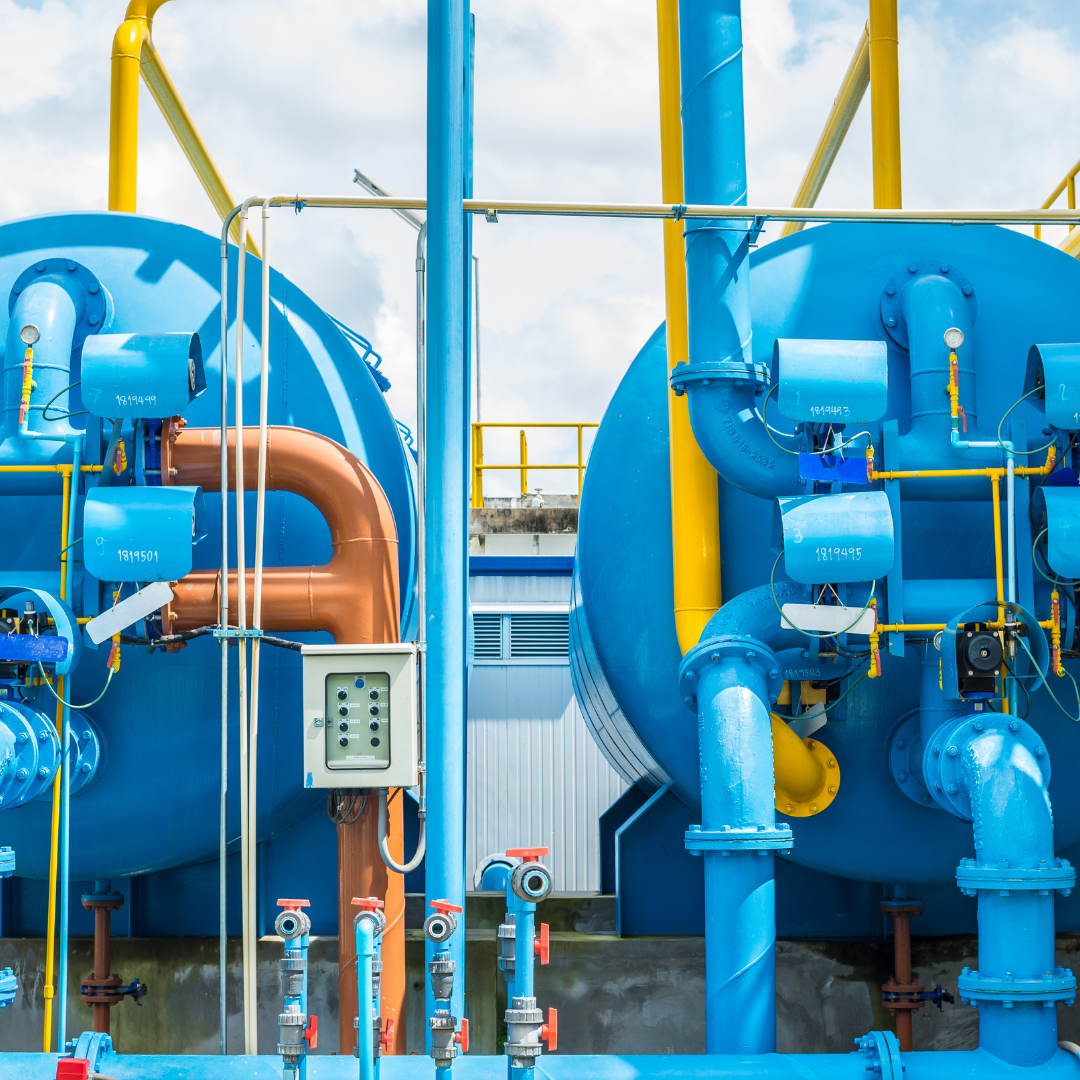
Pretreating boiler feed water addresses both issues. Softening removes the hardness that causes scale. Reverse osmosis goes further, removing most dissolved solids so the boiler can run longer between blowdowns. The result is lower water, fuel and chemical costs and longer equipment life.
Different Facilities Have Different Water Needs
A craft brewery doesn’t need the same system as a dairy processor. A beverage bottling plant has different requirements than a commercial kitchen, commissary or packaged ice operation.
Even two facilities making similar products can face very different water challenges based on location, source water, production volume and existing infrastructure. A brewery on city water in Baltimore and one on a private well in Frederick County may make the same style of beer and have almost nothing in common at the tap.
The starting point for any food processing water treatment project isn’t equipment. It’s understanding what the facility needs its water to do. Once those requirements are clear, the system can be designed around them instead of forcing the operation to adapt to an off-the-shelf solution.
Local Water Treatment Support in Maryland and the Mid-Atlantic
Water treatment isn’t finished when a system is installed.
Preventive maintenance, monitoring, replacement components and fast service all drive long-term performance. When production depends on your water system, having an experienced team nearby makes a real difference.
Neu-Ion is based in Maryland and serves facilities throughout Maryland, Washington, D.C., Virginia, Pennsylvania and Delaware, handling design, installation, maintenance and ongoing service. Our customers get a local team that knows their system and can be on site when it matters, not a national vendor that ships equipment and moves on.
Building the Right Water Treatment Strategy
There’s no universal “right” water system for food and beverage production. The right solution depends on your source water, production process, required water quality, daily volume, facility layout and long-term goals.
Our team evaluates each of those factors before recommending equipment. Whether the answer is reverse osmosis, DI water, softening, filtration, UV or a combination, the goal stays the same: reliable water quality that supports the operation behind it.
Ready to Take a Closer Look at Your Water?
If you’re planning a new facility, expanding production or wondering whether your current system is costing you more than it should, start with your water.
Neu-Ion will review your source water, talk through your process and production goals, and recommend a system designed around your operation, not a catalog.
Call 800-678-4360 or visit neu-ion.com to schedule your water quality assessment.
Personalized Care. Family Promise.